

Clarios powering future automotive developments
Battery manufacturer, Clarios is set to play an important role in fuel-saving start-stop technology. It says 80 per cent of new start-stop vehicles are equipped with its AGM or EFB battery.
According to a Clarios study, the start-stop share in the EU car park will nearly be doubled between 2018 and 2023. The start-stop growth makes AGM and EFB batteries the leading product technology in the EU battery aftermarket of the near future.
As the driving force behind the current environmental developments, the start-stop technology is a key solution for fuel-saving.
Conventional batteries cannot provide the required energy during start-stop because their cycle life is reduced when the charge level falls below 80 per cent.

In contrast, the Varta Silver Dynamic AGM by Clarios, enables the battery to be discharged down to 50 per cent of its specified capacity.
“It can therefore easily cope with the periods when the engine shuts down as a result of fuel-saving functions,” says Michael Johannes Gossner, manager product marketing at Clarios.
The AGM battery also ensures that the engine always starts reliably after every stop in start-stop mode. Gossner therefore advises: “AGM batteries fitted as standard should be replaced only by AGM batteries.”
If customers opt for the Varta Silver Dynamic AGM, they can also be confident that this was originally produced for use in new vehicles. This is shown by the OE logo.
With a cycle life up to three times longer than that for conventional batteries, Clarios AGM and EFB batteries are therefore ideal for vehicles with particularly high energy demands. With the increasing number of start-stop cars, Clarios offers an additional AGM auxiliary battery as a perfect complement for backup applications and comfort functions in premium cars.
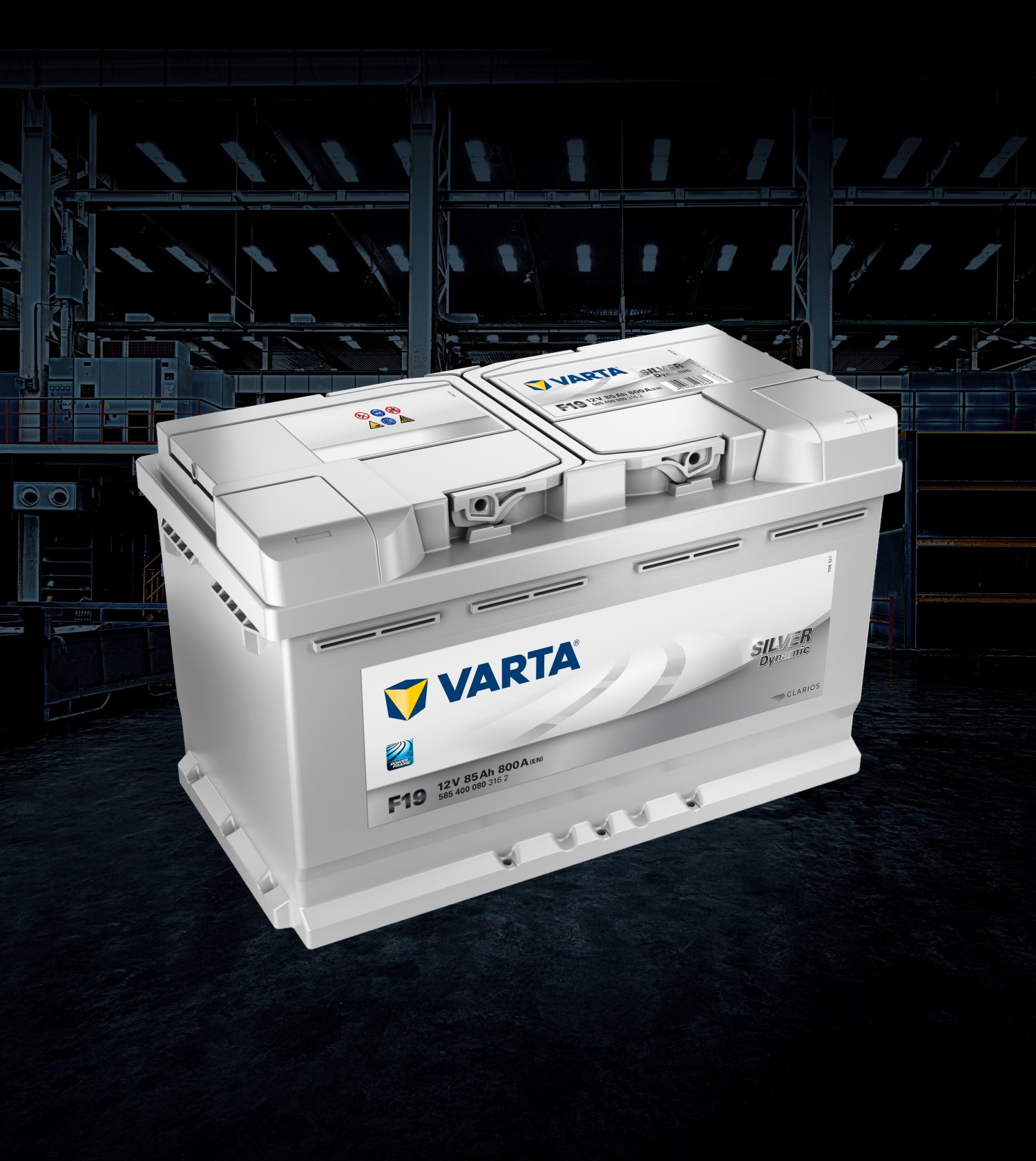
The Clarios lead-acid portfolio is also designed to support upcoming electric and driverless vehicles. Lead-acid solutions deliver crucial safety systems, comfort features and fuel-saving functions in today’s and future vehicles. They support the system when the main battery is switched off or failing: If the high-voltage system fails, it can still support important functions such as power steering and power breaking.
Car drivers will increasingly find tasks being handled by smart systems and will hand over some of their vehicle monitoring functions to automatic control systems. This in turn will increase the need for a reliable, high-performance power supply system.
Lithium-ion batteries are considered the successor system for lead-acid technologies when it comes to electric or driverless vehicles. Nevertheless, lead-acid solutions still are required in future vehicles.